
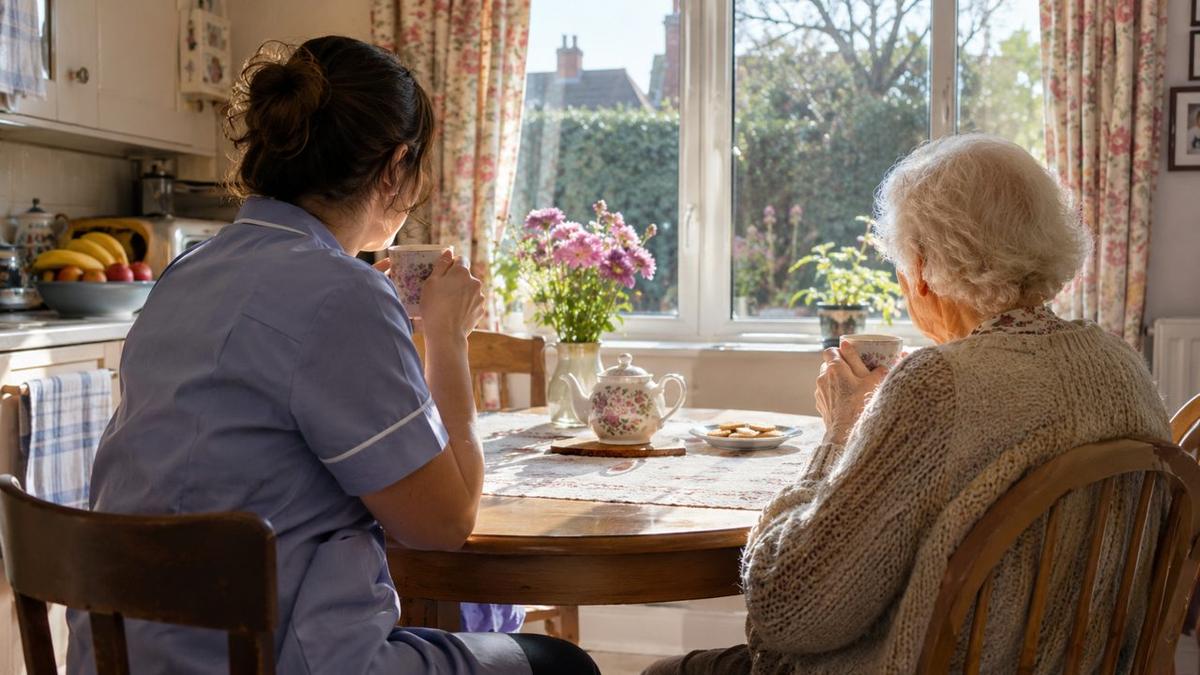
A care worker salary in England now starts from a legal floor rather than a negotiated pay scale, which makes it one of the easiest wages in the country to benchmark and one of the hardest to grow. The most recent national figure we could verify from Skills for Care, the workforce body for adult social care, puts the median at £12.60 an hour in the independent sector as at December 2025. That number is already out of date in one important respect: the National Living Wage overtook it on 1 April 2026. This guide explains what the published data shows, what you should expect to earn now, which hours must be paid, and how the rules are due to change by April 2028.
Care worker salary in 2026: the figures that matter
The figures below cover the independent sector, meaning private and voluntary providers rather than councils or the NHS. The Skills for Care pay analysis, with data as at December 2025, put the bottom tenth of care workers at £12.21 an hour and the top tenth at £13.91. In other words, the gap between the lowest paid and the best paid was £1.70 an hour.
That narrow band is the main thing to understand about this job. At the same date, 26% of care workers were paid within 10p of the legal minimum. Across the independent sector, 48% of the workforce was earning less than the £12.71 rate due in April 2026, and for care workers the share was 55%. That covered roughly 495,000 care worker roles, so for many people the April increase in the legal minimum was the pay rise.
| Benchmark | Hourly rate | Period or date |
|---|---|---|
| Care worker median, independent sector | £12.60 | December 2025 |
| Top tenth of care workers | £13.91 | December 2025 |
| Bottom tenth of care workers | £12.21 | December 2025 |
| Median in London | £13.00 | December 2025 |
| Median in the South West | £12.80 | December 2025 |
| Median in the East Midlands | £12.50 | December 2025 |
| Median in the West Midlands | £12.45 | December 2025 |
| National Living Wage, age 21 and over | £12.71 | From 1 April 2026 |
| National Living Wage, age 21 and over | £13.21 | From 1 April 2027 |
| Real Living Wage, outside London (voluntary) | £14.10 | Announced 15 October 2026 |
| Real Living Wage, London (voluntary) | £15.45 | Announced 15 October 2026 |
Read the table with care. The regional medians predate the April 2026 rise, so nobody aged 21 or over should be earning those rates today if they sit below £12.71. The next Skills for Care pay report is due in March 2027, using data from December 2026. You can see how these rates compare with the wider workforce in our guide to UK median salary in 2026.
What the rise to £13.21 means for your pay
The government confirmed on 28 October 2026 that the National Living Wage will rise by 3.9% to £13.21 from 1 April 2027. The rate for 18 to 20 year olds goes from £10.85 to £11.27, and the rate for under-18s and apprentices from £8.00 to £8.31. Apprentices aged 19 or over who have finished their first year get the rate for their age group. Our minimum wage guide covers who qualifies and what those rates mean after deductions.
Because so many jobs sit close to the floor, a rise in the legal minimum works like a pay rise for much of this workforce. It also squeezes differentials. Skills for Care found that senior care workers earned 6% more than care workers in December 2025, down from 11% in March 2017. Staff with five or more years of experience earned about 10p an hour more than new starters, compared with a gap of between 26p and 37p in 2017.
So long service alone is worth very little in pay terms. If you want a bigger jump, moving into a senior role or comparing what other employers offer is likely to do more than waiting.
Worked example: annual pay and unpaid travel time
Here are two illustrative calculations, both gross and before tax, National Insurance and pension contributions.
Annual pay on the legal minimum. Take a care worker aged 21 or over on a 37.5-hour week:
- At £12.71: 37.5 hours gives £476.63 a week, or about £24,785 over 52 weeks.
- At £13.21 from April 2027: 37.5 hours gives £495.38 a week, or about £25,760 over 52 weeks.
- The difference is about £975 a year for the same hours.
Checking a home care payslip. Suppose a home care worker is paid £13.00 an hour, but only for time with clients. In one week they spend 30 hours on visits and 5 hours travelling between them. Their pay is 30 x £13.00 = £390. The working time for minimum wage purposes is 35 hours, so the effective rate is £390 divided by 35, or about £11.14 an hour. That is below £12.71. To reach the minimum on those hours, gross pay would need to be at least £444.85, a shortfall of £54.85 for the week.
A headline rate above the minimum proves nothing on its own. What counts is total pay divided by all the hours that count as work.
Which hours must be paid
GOV.UK guidance gives a clear answer for travel. Time spent travelling from one work assignment to another counts as working time, and the official example is a care worker driving from one client to another between appointments. Travel between home and work generally does not count, including the trip from home to the first visit and from the last visit back home. If you go home between two appointments, that travel does not count either.
Sleep-in shifts are less straightforward. Following the Supreme Court ruling in 2021, sleep-in workers are entitled to the minimum wage only when they are awake for the purposes of working. Three points from the current guidance, last updated on 23 October 2026, are worth knowing:
- Time asleep can be left out only if the employer provides suitable sleeping facilities. If it does not, the minimum wage is due for the entire shift.
- If you are expected to be awake and working for most of a shift, with only occasional naps between tasks, you are likely to be owed the minimum wage for the whole shift.
- Each case depends on the contract and what really happens on shift.
Keep your own record of visits, travel and any night-time call-outs. It takes little effort, and it is the evidence you will need if a payslip looks wrong.
Demand, vacancies and job security
Finding work is not the difficult part. Adult social care in England had about 1.59 million filled posts in 2025/26 on Skills for Care estimates, up 22,000 or 1.4% on the year before, which was the slowest growth in four years. The vacancy rate fell to 6.2%, the lowest since 2015/16, and that still means about 96,000 vacancies on any given day. Skills for Care says the rate remains about three times that of the wider economy. It projects that a further 410,000 posts could be needed by 2040.
The supply of staff is also shifting. Direct international recruits fell to 30,000 in 2025/26, the lowest level in four years, and posts held by British nationals fell by 40,000 over the year. Since 22 July 2025, employers have not been able to sponsor care workers or senior care workers who are applying from outside the UK. Workers already here can still switch into sponsored care roles if they have worked legally for that employer in the job for at least three months, but the application must be made no later than 22 July 2028. In England, the sponsor must also hold active registration with the Care Quality Commission.
Conditions vary widely between employers, and the turnover data shows it. Skills for Care reported in October 2026 that care worker turnover falls from 34.3% to 15.3% when employers combine competitive pay, guaranteed hours, training, qualifications and full-time opportunities. Only one in four independent employers contribute more than the 3% minimum to care workers' pensions, and the same share pay more than Statutory Sick Pay. Those are useful questions to ask at interview.
How to become a care worker and move up
The National Careers Service lists four main routes in: a college course, an apprenticeship, volunteering and applying directly. Many employers will train people who have the right personal qualities, although some ask for GCSEs in English and maths. You will need to pass enhanced background checks, and a driving licence is a useful extra. Typical hours are 35 to 45 a week, often including evenings and weekends.
The service quotes a salary of £20,000 to £25,000 a year, but the page carries no date. As the worked example shows, a 37.5-hour week at the current minimum already comes to about £24,785, so treat the lower figure with caution and work from the hourly rate and guaranteed hours in the job advert.
Progression usually runs through senior care worker or palliative care assistant roles, then team supervision or care services management with further qualifications. Specialist training in areas such as dementia support and autism awareness is another option. Qualifications may also help you stand out: Skills for Care says 37% of care and support workers hold a level 2 or higher qualification, down from 48% in 2018/19. To apply, start with a clear CV and then browse current UK jobs. If you are weighing up other health roles, compare our nurse salary guide.
The Fair Pay Agreement due in April 2028
The biggest change on the horizon applies to England. In its response published on 16 July 2026, the government said a new Adult Social Care Negotiating Body will negotiate pay and terms and conditions, and may also consider training and career progression. The timetable is:
- Regulations laid in 2026, with the body set up and its members appointed in 2026 to 2027.
- Negotiations expected to begin around April 2027 and last six months.
- A six-month implementation period.
- The first agreement taking effect in April 2028.
The maximum funding available to councils to cover the extra costs has been set at £500 million for the first year. Self-employed workers and unpaid carers are not covered, and neither are staff already under other national pay arrangements, such as NHS Agenda for Change. We found no agreed pay rates in the government response, so treat any figure you see quoted for 2028 with caution.
Care worker pay FAQ
What is the average care worker salary per hour?
The median was £12.60 an hour in the independent sector in England as at December 2025. Anyone aged 21 or over must now receive at least £12.71.
Do care workers get paid for travel time?
Travel between clients counts as working time for the minimum wage. Travel from home to the first visit and back from the last visit generally does not.
Where is care work paid the most?
London had the highest regional median at £13.00 in December 2025, and the West Midlands was among the lowest at £12.45.
Are sleep-in shifts paid at the minimum wage?
Only time awake for the purposes of working counts, provided suitable sleeping facilities are supplied. Without them, the minimum wage is due for the whole shift.
Can employers still sponsor care workers from abroad?
No. Since 22 July 2025 the worker must already be in the UK and applying for permission to stay, and the switching provision ends on 22 July 2028.
Do I need qualifications to become a care worker?
Not always. Many employers train new starters who have the right personal qualities, but you must pass enhanced background checks.
Conclusion
Care work offers plenty of openings and a legal pay floor due to rise again in April 2027, but little reward for staying put. Check that your total pay covers all your working time, compare employers on guaranteed hours, pensions and sick pay as well as the hourly rate, and look at qualifications and senior roles as ways to move up. The Fair Pay Agreement could reset the picture in April 2028, but for now the £13.21 minimum from April 2027 is the firm number to plan around.
Sources: Skills for Care (size and structure report, June 2026; state of the sector announcement, October 2026; pay analysis with data as at December 2025, as summarised by Care England, The Carer and The Care Home Environment); GOV.UK (National Minimum Wage rates, minimum wage guidance, sponsor guidance version 04/26, government response on the fair pay agreement); National Careers Service; Living Wage Foundation.